

Article contents

Spread betting allows you to avoid tax on your trades as your winnings are counted as gambling, rather than investment profit, which is tax-free. Spread betting is hugely popular, and is essentially betting an asset like a stock would increase or decrease in value instead of physically buying and selling the share itself.
We’re pretty lucky in the UK when it comes to trading and investing tax-free (which makes you wonder why most people don’t invest!). First, of all, we have a tax-free ISA, where you can invest up to £20,000 tax-free per tax year (April 6th to April 5th the following year), but there’s more than that, and something more suited to advanced traders (or at least people who know what they’re doing) and that’s spread betting.
Spread betting is where, instead of making an investment by buying a physical asset (e.g. Apple stock) with the view it would grow in value in future, you would take a position with a trading platform, that Apple stock will increase or decrease. You don’t own any stock, and it’s effectively a bet on the underlying price of the instrument between you and the broker.
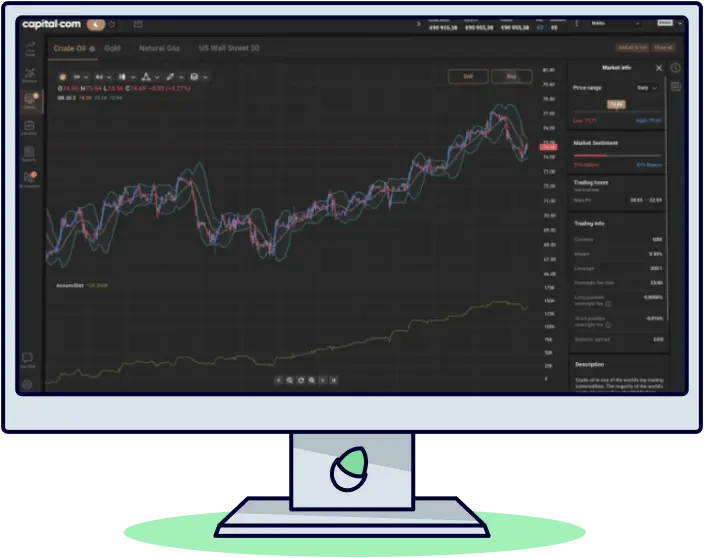
With spread betting, since profits are technically classed in the same way as winnings, there’s generally no capital gains tax or stamp duty to pay, although tax treatment depends on individual circumstances.
Capital.com is a leader in trading. There’s a wide range of investments and low fees overall.
Spread betting works by staking a certain amount per point of price movement. That’s a bit complicated, but it means that you don’t have a fixed amount of money won, like for instance 2/1 odds with horse racing or football. Instead you would bet say £5 per point movement, and the value of your position would grow (or fall) in line with the underlying asset.
For instance, let’s say a stock is priced at £100. If you place a wager of £5 per point increase, and the stock price increases to £101, this would mean we win £5. On the other hand, if it falls to £99, we would lose £5. (These calculations do not consider the impact of any additional fees that may apply).
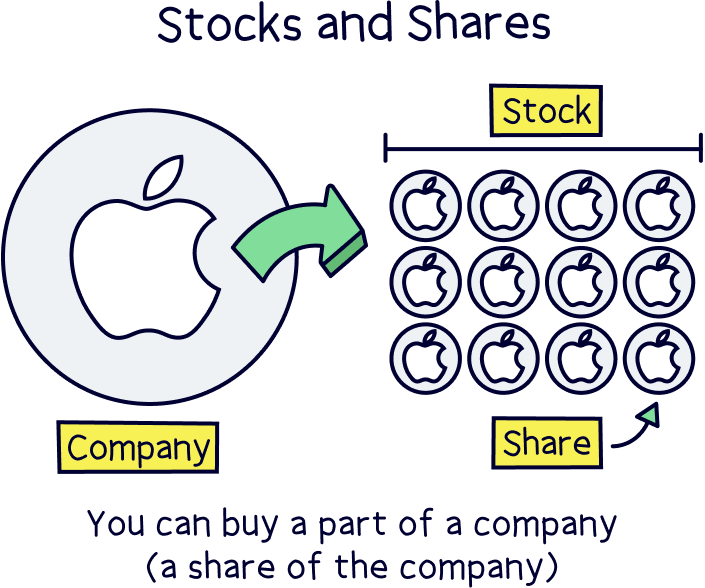
The pricing essentially mimics the stock’s movement itself. And this applies to a huge range of assets, such as gold, silver, oil, any stock and share across the globe, stock indices themselves (e.g. FTSE100), foreign exchange (forex) and more.
What also makes spread betting popular (aside from being tax-free), is that you can use leverage when trading. This means you are required to place an initial deposit (margin) to open a position that is larger than the amount you deposit. Leverage can magnify both potential profits and potential losses, and losses can occur rapidly.
For example, using 5x leverage means a £100 deposit gives you exposure to a £500 position. Your profit or loss is calculated on the full £500 exposure, not just the £100 deposit.
If the asset price increases so that the value of the position rises from £500 to £505, the £5 increase represents your profit, even though you only deposited £100. If the asset price falls so that the position value drops from £500 to £495, the £5 decrease represents your loss.
So, as an example, let’s say you have a £50 deposit and use 5x leverage, you can now make a trade with a value of £250. If the share price increases by 10%, instead of making £5 (10% of your £50 deposit) you now make £25 (10% of £250), 5x more.
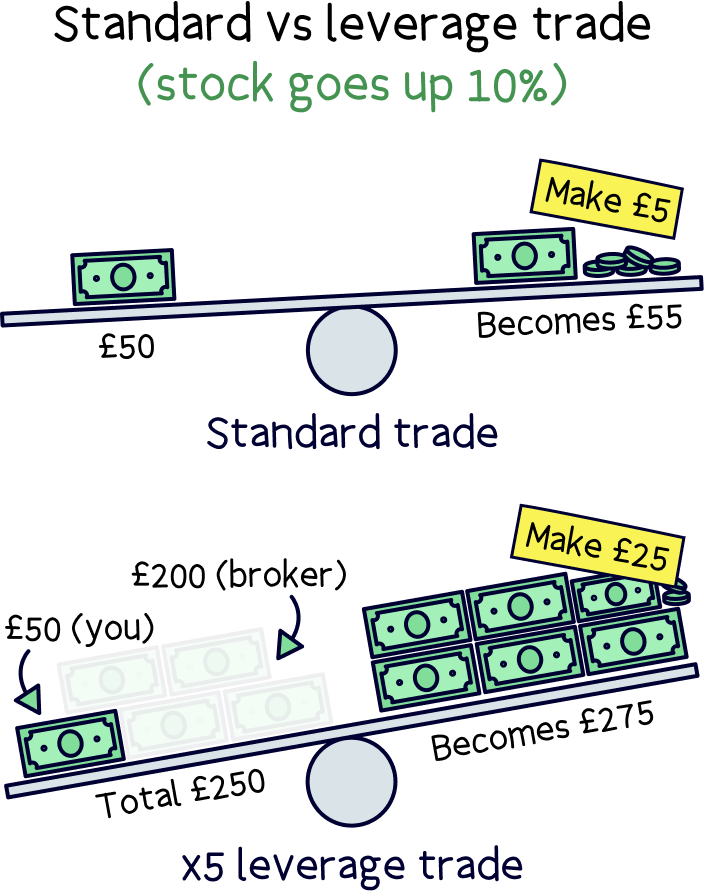
However, if the share were to fall 10%, we’d lose £25 instead of £5, which is a significant percentage of the amount wagered (our deposit).
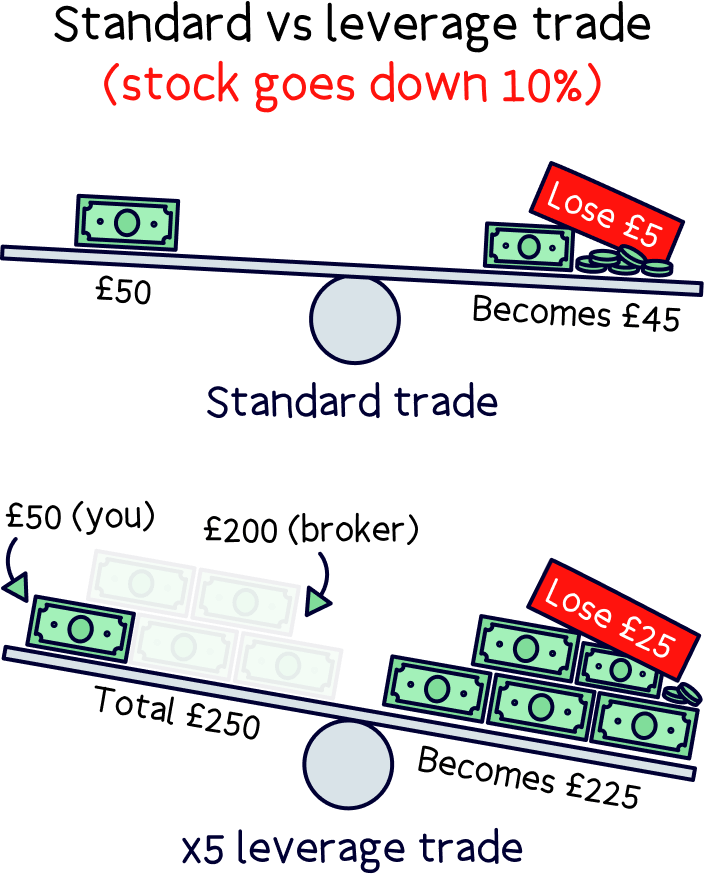
(These calculations do not consider the impact of any additional fees that may apply).
A further reason people choose spread betting is that you can also use it to short. This means instead of speculating on the price of an asset to go up, you can take a position on it falling in value. The spread bet works in exactly the same way, except you’ll now profit per point that it falls, instead of rises. Conversely, you will also lose money per point the market goes against you.
Excited to jump into spread betting already? Here’s our top option.




Capital.com is a very well established, and award-winning trading platform, best in class in five categories at the 2026 BrokerChooser Awards.
It’s suited more towards experienced and advanced traders due to its features, but if you’re a beginner, it’s still a great place to learn, as there’s a wide range of trading resources and a user-friendly interface.
The number of markets you can trade is huge, including thousands of stocks across the globe, and offers forex (over 120 currency pairs, which you can trade 24/5). And it offers spread betting, so you can trade tax-free (in the UK). Tax treatment depends on individual circumstances.
The fees are fair overall. There’s no commission, although other fees apply, and it’s free to open an account and deposit money. You’ll pay a fee based on the spread of an asset, which is the difference between the buy price of an asset and the sell price. This is typical with most platforms, and with Capital.com the spread is transparent.
It’s very popular, with over 750,000 active traders globally, and the customer service is excellent, and runs 24/7.
Overall it’s a great platform, and well worth checking out.
Capital.com is a leader in trading. There’s a wide range of investments and low fees overall.
With spread betting, you can trade:
If you were not trading via spread betting, and not investing within a tax-free ISA (not typically offered on advanced trading platforms anyway), the tax you’d pay is Capital Gains Tax.
Capital Gains Tax is a tax on the profit you make from your trading, and is calculated based on an asset increasing in value after you buy it, and you realising that profit by selling.
For instance, if you had £10,000 in Apple stock, and it increased to £20,000 and you sold it, you would typically have to pay Capital Gains Tax on the £10,000.
Note: these are general guidelines on tax and spread betting. It’s best to assess your own tax circumstances and tax rules that might apply to you.
The current rate of Capital Gains Tax is 18% if you are a basic rate taxpayer (earning less than £50,270 per year) and 24% if you are a higher rate or additional rate taxpayer (earning more than £50,270 per year).
However, you also have a Capital Gain Tax allowance each tax year (April 6th to April 5th the following year), which is £3,000. So, the first £3,000 profit you make is shielded from tax.
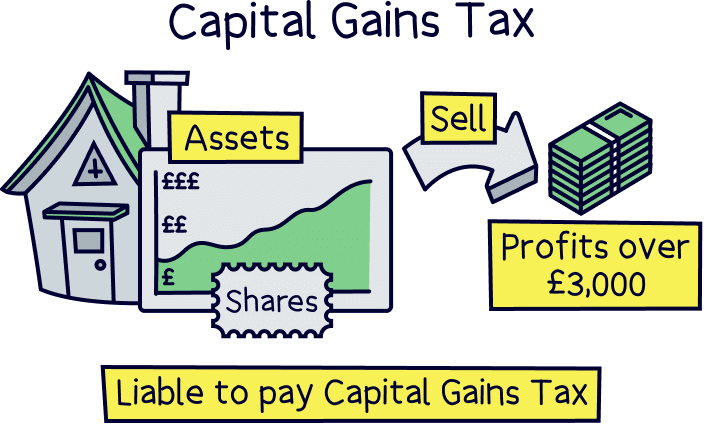
If you make over £3,000 per year in profit from trading, you’ll need to complete a Self Assessment tax return, which will calculate how much tax you’ll pay overall, from all of your earnings (profits).
Depending on how you invest, there are other taxes such as taxes on investments that provide an income, or investments that provide a dividend (a company paying its profits back to shareholders), however these are more typical with long term investors and not short term traders.
Capital.com is a leader in trading. There’s a wide range of investments and low fees overall.
Spread betting is a popular choice when trading in the UK. You’ll place a bet on the price direction of an asset (e.g. a stock like Apple), either increase in price, or decrease in price.
You then bet a certain amount per point increase or decrease, for instance £5 per point (the point depends on the asset you are trading, e.g. £100 to £101 of a stock price is 1 point), and then as the asset increases or decreases in value, your bet also increases or decreases (e.g. you win £5 if up by 1 point, £10 if up to 2 points).
You’re trading with the broker (investment platform), rather than buying the underlying asset, which means it’s not an investment that typically carries any taxes. It’s taking a position on the price movement. That’s all.
There’s a whole range of trading strategies open for spread betting, and you can trade on a huge amount of markets, including stocks and shares, commodities (e.g. gold) and foreign exchange (e.g. GBP/USD).
You can also trade with leverage, where you can open positions larger than the amount you deposit, meaning your profits (but also losses) are amplified.
Excited to start? Check out Capital.com, our recommended broker for spread betting. Good luck!
Capital.com is a leader in trading. There’s a wide range of investments and low fees overall.
We’d love to hear from you, and it will help others too.
Edward Savage is a leading expert on money, with a background of 8 years working in financial services in London, has a business, accounting and finance degree, runs an investing community, and teaches people about money. He writes about all aspects of personal finance, including pensions, investing, mortgages and insurance.

This article was written, reviewed and fact checked by the expert team at Nuts About Money. You’re in safe hands. Learn more.
We're experts in all things investing, with many years of combined experience writing and talking about investing and trading. Some of our team were top financial advisors. We understand and love helping people learn more about both short term trading and investing for the long term – investing can be a great way to grow your money over time.

More than 20 years of combined experience researching and writing about investing
Qualified team (APFS - Advanced Diploma in Financial Planning)
A wide range of trading and investing companies researched and reviewed, and a transparent review process
We follow a strict editorial code to ensure you get the best information possible
Capital.com is a leader in trading. There’s a wide range of investments and low fees overall.